Emily Zhied
 Resource allocation in professional services is the process of assigning people, time, and budget to projects to ensure work is delivered efficiently and on time. It defines who does the work, when it happens, and how resources are distributed across tasks.
In service-based organizations, where delivery depends on people’s time and expertise, resource allocation directly impacts project timelines, costs, and overall performance. Understanding how resource allocation works is essential for maintaining control over delivery and scaling operations without increasing risk.
What is resource allocation in professional services?
Resource allocation in professional services is the process of assigning people, time, and budget to projects in a way that ensures work is delivered efficiently and on time.
In practice, it means deciding:
-
who works on what
-
when they work on it
-
how much budget and effort is assigned
The goal is simple: match the right resources to the right work without overloading teams or missing deadlines.
What does resource allocation include?
Resource allocation in service organizations typically covers six core areas:
Personnel Assignment: Finding and assigning individuals with the required skills and experience for specific projects or tasks.
Time Management: Effectively plan and track employees’ time to meet project deadlines.
Financial Planning: Budgeting and managing financial resources and controlling project costs to ensure projects are delivered within the allocated budget.
Workload Balancing: Distributing work among team members to avoid overload and effectively utilize everyone’s skills.
Risk Management: forecasting, identifying, and managing potential risks associated with resource allocation to minimize in-service delivery.
Adaptability: Flexibility and adjustment of resource allocation in response to customer requirements or problems encountered.
Collaboration: Maintaining communication channels to keep both clients and team members informed with a free Client portal about resource allocation plans, progress, and any adjustments made.
Visualize yourself as the maestro of a grand symphony, poised for a virtuoso performance. Just as each instrument contributes a unique timbre to create an exquisite harmony, resource allocation is the key to orchestrating a triumphant project. Welcome to our comprehensive guide on resource allocation in Professional Services, where we’ll explore the intricacies of this indispensable practice, its profound significance, the challenges it presents, and the tools that can elevate your skills to new pinnacles.
Resource allocation vs planning vs leveling
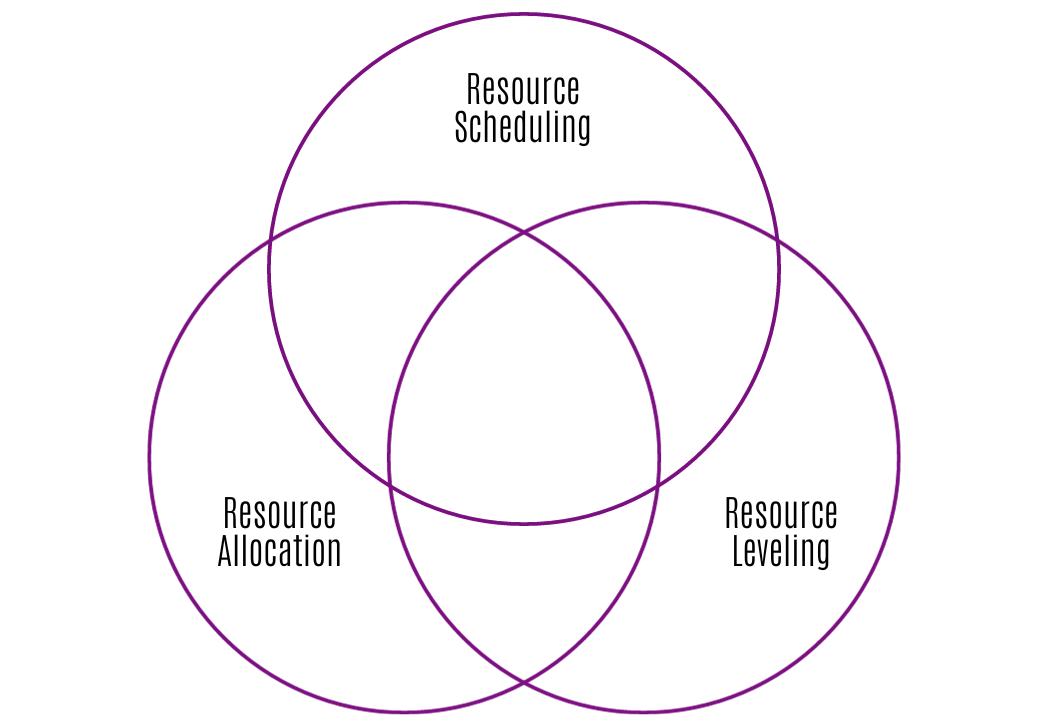
These terms are often used interchangeably, but they solve different problems:
-
Resource planning → what resources are needed (skills, roles, capacity)
-
Resource allocation → who is assigned to what work
-
Resource leveling → how workloads are balanced to avoid overuse or gaps
Understanding this distinction helps teams move from estimation to execution without overloading resources or creating bottlenecks.
Why resource allocation matters in professional services
Resource allocation directly affects delivery performance. When done well, it improves speed, cost control, and team stability.
Key outcomes of effective allocation:
-
Faster project delivery → teams start work without delays
-
Better budget control → fewer cost overruns
-
Higher quality work → skilled people are assigned correctly
-
Balanced workloads → reduced burnout and turnover
-
More predictable results → fewer last-minute surprises
In service-based businesses, where revenue depends on people’s time, poor allocation quickly leads to missed deadlines and margin loss.
Resource allocation challenges and solutions
Navigating the maze of Professional Services often means grappling with the puzzle of resource allocation. Each turn presents its own set of challenges. Yet, with every challenge comes an opportunity for a solution, a strategic move forward. In this exploration, we dissect some of these common challenges and equip you with strategies to tackle them head-on. Let’s embark on this journey of problem-solving together.
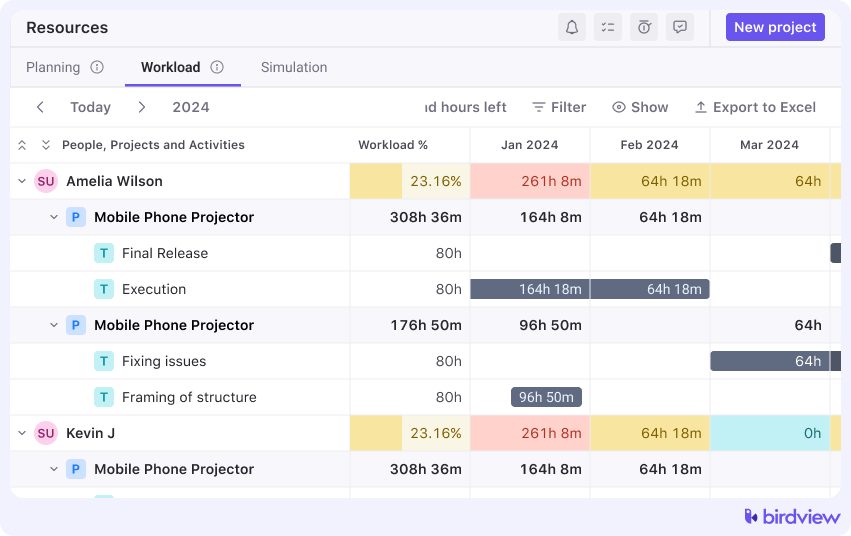
Challenge: Resource overallocation
- Solution: Prioritize tasks judiciously, harness resource scheduling software, and cultivate transparent dialogue with stakeholders.
Challenge: Limited resources
- Solution: Unleash creativity, set pragmatic expectations, and engage in forthright communication regarding resource constraints.
Challenge: Changing project scope
- Solution: Routinely reassess resource allocation, display nimbleness, and keep stakeholders apprised about scope alterations.
Tools and techniques for effectively allocating project resources in professional services
Resource allocation is the lifeline of any project. Getting it right can mean the difference between project success and failure. Various instruments and methods assist project managers in efficiently allocating their resources. One such pivotal tool is the Resource Breakdown Structure (RBS). Let’s explore this and other vital tools and techniques.
Resource Breakdown Structure (RBS)
The RBS is akin to a blueprint or a tree diagram for your resources. It offers a hierarchical depiction of resources by category and type. This structure allows managers to:
- Visualize resource categories: At its top tiers, the RBS might segregate resources into broad categories like human resources, machinery, software, or materials. This helps in ensuring that no major resource type is overlooked.
- Detail-specific resources: As we move down the structure, it becomes more granular, pinpointing specific resources such as a particular kind of software or individual team members with specialized skills.
- Facilitate allocation: With an RBS in place, managers can allocate resources to specific tasks more systematically, ensuring that each task has everything it needs.
Resource levelling
This technique smoothens the distribution of resource usage by resolving over-allocations. Delaying tasks that aren’t urgent or shifting resources from lesser-priority tasks, guarantees a steadier distribution of resources throughout the project’s duration.
Resource smoothing
Similar to leveling, smoothing also deals with over-allocations but operates within set timeframes, ensuring that resources aren’t overburdened during any given period while not delaying the project’s completion date.
Matrix-based charts
Tools like the Responsibility Assignment Matrix (RAM) visually represent the relationship between tasks and resources. By mapping who is responsible, accountable, consulted, and informed (RACI) for each task, these charts facilitate clearer communication and ownership.
Software solutions
Today’s Professional Services platforms commonly embed resource allocation features.
Professional Services Automation Software (PSA) like Birdview PSA can auto-schedule, monitor over-allocations, and provide insights on resource usage.
Historical data analysis
By examining previous projects and their resource consumption, managers can extract valuable lessons and make well-informed choices. This aids in recognizing trends, foreseeing potential hurdles, and refining allocations for upcoming tasks.
Conclusion
Resource allocation in professional services is a continuous process of matching people, time, and budget to project needs.
When done well, it improves delivery speed, protects margins, and keeps teams productive.
When done poorly, it leads to delays, burnout, and inconsistent results.
The difference comes down to visibility, planning discipline, and the ability to adjust quickly.