Emily Zhied
 Engineering projects are rarely simple. They involve detailed planning, multiple disciplines, tight schedules, and constant coordination between teams, tools, and stakeholders. For team in construction, manufacturing, infrastructure, or product development, project management software plays a key role in keeping work organized.
With many platforms claiming to support engineering workflows, choosing the right tool can be difficult. This article compares seven project management solutions designed for engineering teams, focusing on:
- Best fit (the types of engineering teams and projects each tool supports)
- Core capabilities (planning, scheduling, resource management, collaboration, and reporting)
- Tradeoffs and limitations to consider
In this guide, we highlight the 7 best engineering project management software platforms in 2026 that support complex engineering work without adding unnecessary overhead or process friction.
| Tool | Best for | Key features | Free plan / free trial |
| Birdview PSA | Engineering & service teams needing end-to-end project, resource, and portfolio management | Project planning & scheduling, resource planning, time tracking, dashboards, collaboration, budgeting | Free trial (up to 28 days) and demo are available |
| Procore | Large construction & engineering projects with field + office coordination | Construction project scheduling, document control, real-time collaboration, budget & change management | Free account/trial options vary; demos available |
| Oracle Primavera P6 | Large, complex engineering & capital programs | Enterprise scheduling & CPM, resource & cost management, multi-project control | Demo available; no standard free plan/trial widely advertised |
| Jira Software | Engineering & development teams with Agile needs | Scrum/Kanban boards, issue tracking, custom workflows, reporting | Free plan available (up to 10 users) |
| Microsoft Project | Traditional project scheduling & resource planning | Advanced Gantt charts, scheduling tools, resource management, MS 365 integrations | Free trial typically included via Microsoft 365 |
| Planview | Enterprise portfolio & program management | Strategic planning, portfolio visibility, resource optimization, real-time insights | Demos/free trials available upon request |
| Wrike | Cross-functional engineering teams & collaboration | Custom dashboards, Gantt charts, task automation, integrations | Free plan available; free trial offered |
What is engineering project management software?
Engineering Project Management Software is a specialized tool designed to assist engineers and project managers in planning, executing, and monitoring engineering projects. This type of software is tailored to meet the unique demands of engineering projects, which often involve complex designs, rigorous regulatory standards, and a need for precise coordination of various technical aspects.
At its core, engineering project management software provides a framework for managing the lifecycle of an engineering project. This includes initial planning, resource allocation, scheduling, cost management, and performance tracking. The software typically features a range of functionalities to address the specific challenges of engineering projects, such as collaboration tools, resource forecasting, planning and management, risk management, reporting, and more.
Key features to look for in engineering project management software
🗂 Advanced project planning and scheduling
Engineering projects depend on accurate timelines and task dependencies. Look for software that supports detailed schedules, Gantt charts, milestones, and critical path tracking, so teams can plan complex work and understand how delays impact the bigger picture.
🧩 Resource and capacity management
Engineering teams often juggle specialized skills, shared resources, and limited availability. The right tool should help you assign the right people to the right work, track capacity, and prevent overallocation before it becomes a problem.
📐 Task dependencies and workflow structure
Engineering work is rarely linear. Software should support task dependencies, phased workflows, and structured breakdowns so work progresses in the correct order and handoffs between teams stay clear.
🔄 Change and scope management
Design changes, new requirements, and scope adjustments are part of engineering life. Look for tools that make it easy to update plans, track changes, and understand the impact on timelines, costs, and resources without starting from scratch.
🤝 Collaboration and communication tools
Engineering teams often work across departments, locations, and external partners. Built-in collaboration (comments, file sharing, notifications, and activity tracking) helps keep everyone aligned and reduces miscommunication.
📊 Reporting and project visibility
Clear visibility is essential for decision-making. Look for real-time dashboards and reports that show project progress, risks, resource utilization, and cost performance, helping managers spot issues early.
🔐 Permissions, controls, and auditability
Engineering projects involve sensitive data and defined responsibilities. Role-based permissions, approval workflows, and activity logs help maintain control, accountability, and compliance across teams.
🔌 Integrations with engineering and business tools
Project management software should fit into your existing ecosystem. Integrations with CAD systems, document management tools, ERP, accounting, and time tracking platforms help reduce manual work and data silos.
📈 Scalability and long-term flexibility
As engineering firms grow or take on more complex projects, their software needs change. Choose a solution that can scale with your organization, support multiple projects and teams, and adapt to evolving processes without friction.
Why engineering firms need specialized project management software
For engineering teams, project management is inseparable from delivery. Design, analysis, approvals, resources, costs, and timelines all live inside the same project. When planning, scheduling, and tracking happen across disconnected tools, teams spend time reconciling data, reacting to surprises, and fixing avoidable issues instead of moving work forward.
A project-based platform built for engineering teams helps when you need:
- Clear structure for complex work, using phases, dependencies, and milestones to manage non-linear project flows
- Better resource alignment, matching skills, availability, and equipment to the right tasks without overloading teams
- Tighter control over schedules and changes, so design updates or scope shifts don’t quietly derail timelines
- Real-time visibility into progress and risks, helping managers spot delays, conflicts, or capacity issues early
- Stronger collaboration across disciplines, keeping engineers, managers, and stakeholders aligned in one workspace
- Centralized documentation and traceability, reducing version confusion and supporting audits or reviews
If your projects are small, short, and loosely structured, a general task tool may be sufficient. But for teams managing complex, multi-phase engineering work, dedicated project management software helps turn complexity into clarity
Which engineering firms benefit from project management software?
Any engineering firm that handles multiple projects, tight deadlines, or cross-functional teams can benefit from project management software. Whether you’re delivering large-scale infrastructure, designing mechanical components, or managing multidisciplinary teams, these tools help you stay organized, efficient, and profitable. This includes civil, mechanical, electrical, architectural, and environmental firms. The right tool helps streamline planning, improve collaboration, track resources, and keep projects on time and on budget.
7 top engineering project management tools in 2026
Choosing engineering project management software in 2026 is less about ticking off generic features and more about finding a tool that fits how engineering work is actually delivered. Engineering teams operate very differently depending on project scale, industry, delivery model, and the level of schedule, resource, and compliance control they need.
This comparison covers seven engineering project management solutions commonly used in 2026. The tools span a wide range of use cases, including:
- All-in-one project, resource, and portfolio management for engineering teams: Birdview PSA
- Construction and field-driven engineering projects: Procore
- Large-scale engineering and capital programs: Primavera P6 by Oracle
- Agile and hybrid engineering teams: Jira Software
- Traditional, plan-driven project scheduling: Microsoft Project
- Enterprise portfolio management: Planview
- Work management for cross-functional engineering teams: Wrike
The goal is to help you understand where each tool fits best, so you can choose software that supports your engineering workflows without forcing unnecessary complexity or rigid processes.
1. Birdview PSA
Birdview PSA is a professional services automation platform for project-driven organizations, including engineering consultancies. It gives teams full visibility across the entire project lifecycle–from planning and resource allocation to execution, time tracking, and billing–all in one place.
Birdview is particularly useful for engineering teams working on high-stakes projects with many moving parts. It helps organize work, align teams, and keep projects on track and on budget.
Key features for engineering teams:
- Advanced project planning and scheduling
Engineering projects rely on accurate timelines, dependencies, and milestones. Birdview supports detailed schedules and structured planning, helping teams manage complex, multi-phase work and understand how changes affect delivery dates.
- Resource and capacity management
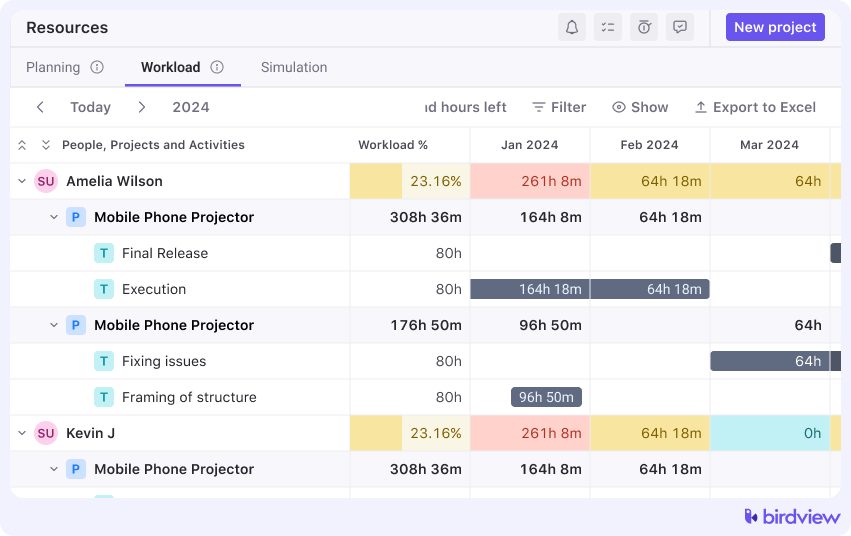
Engineering work depends on the right skills being available at the right time. Birdview helps teams plan workloads, balance capacity, and assign resources based on availability and role requirements.
- Project portfolio management
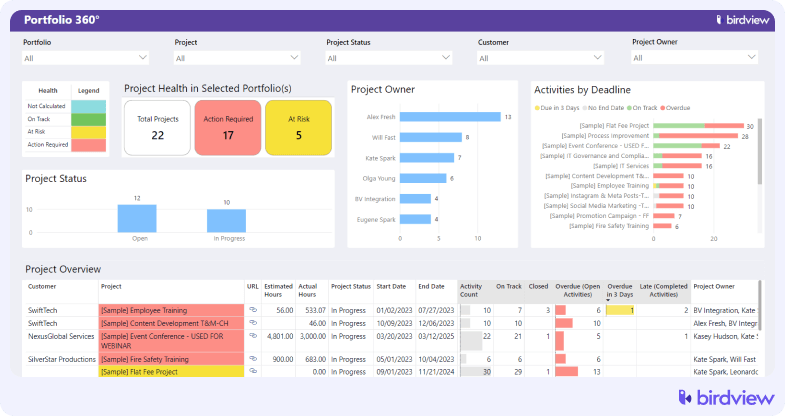
Engineering firms often run multiple projects in parallel. Birdview provides portfolio-level visibility, allowing managers to track progress across projects, compare priorities, and align delivery with strategic goals.
- Real-time project tracking and visibility
Live progress updates give managers and stakeholders a clear view of what’s on track and what isn’t. This helps teams identify risks early, adjust plans quickly, and avoid last-minute surprises.
- Collaboration and communication tools
Engineering teams often work across disciplines and locations. Built-in collaboration features keep discussions, updates, and shared information tied directly to project work, reducing miscommunication and context switching.
- Financial tracking and performance insights
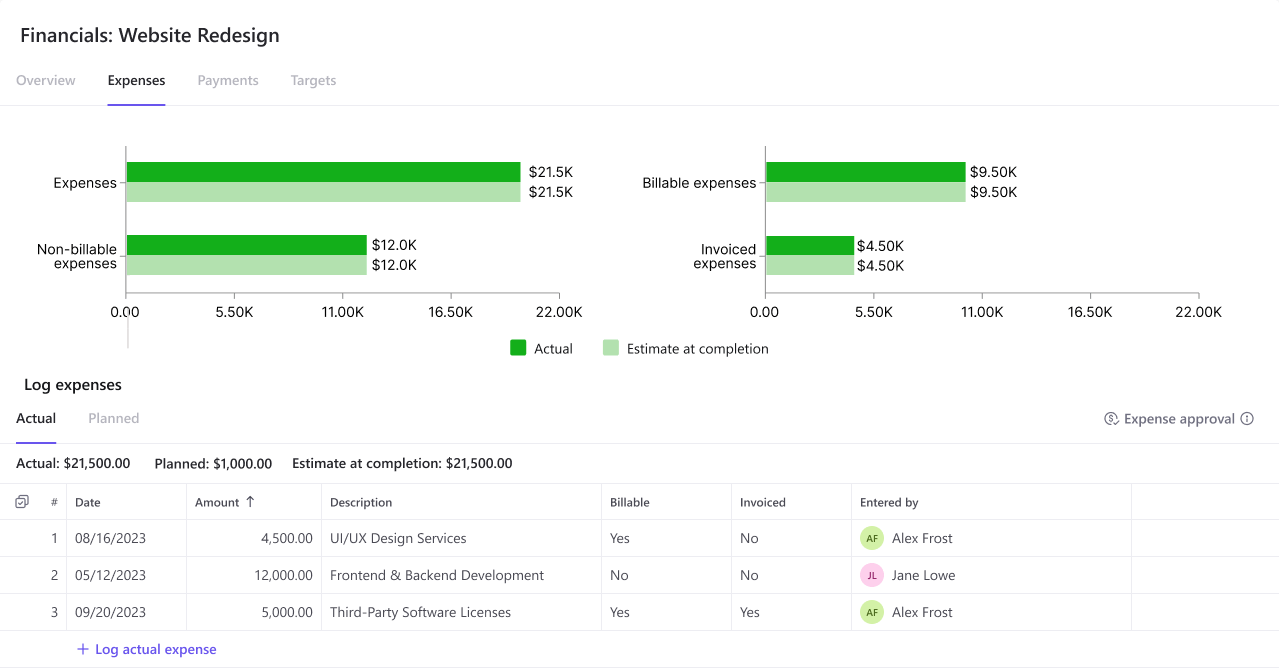
Tracking budgets, costs, and project performance is critical for engineering teams. Birdview links financial data with project progress, helping teams monitor spend, understand cost drivers, and maintain control over profitability.
Purpose-built for engineering teams
Birdview is especially beneficial for large engineering teams tackling complex projects with many interdependencies. Its user-friendly interface, combined with sophisticated features, makes it the perfect tool for teams looking to streamline their project management process and efficiently bring their visions to life.
To accelerate planning, Birdview PSA offers ready-to-use templates for common engineering initiatives, such as infrastructure development or process improvement–making it easier to start fast and deliver on time.
Trial: Birdview offers a free 14-day trial that can be extended to 28 days, so you can test the platform with your actual data and workflows before committing.
 Best Fit: Tailored for large engineering teams grappling with intricate projects and multiple dependencies, Birdview provides a user-friendly interface and powerful features. It transcends traditional project management by propelling projects forward with its advanced features and intuitive design. Birdview is more than just a PM tool; it is a partner in engineering project management, offering reliability, efficiency, and a pathway to success for engineering teams looking to navigate the complexities of their projects with ease and precision.
Pros
- Strong project, resource, and portfolio management in one platform
- Good visibility into schedules, workloads, and financial performance
- Built-in reporting and analytics that help teams track KPIs and performance trends over time
- Scalable for growth (supports transitioning from small teams to larger, multi-project environments)
Cons
- More functionality than needed for very small or simple teams
- Setup and configuration take time for complex environments
2. Procore
Procore offers a dynamic, cloud-based construction management environment, widely utilized by over 4 million professionals. It’s known for its comprehensive feature set that includes real-time collaboration, document management, and quality control tools. Procore simplifies the management of construction projects by allowing seamless tracking of project milestones and budgets.
Main Features: Real-time collaboration, document management, quality control tools, project milestone and budget tracking, API, approval process control, attendance management, automated scheduling.
Trial: not available
Best Fit: Tailor-made for large engineering teams dealing with intricate projects and multiple dependencies.
Pros
- Well-suited for construction and field-based engineering projects
- Strong document control and change management
Cons
- Less flexible for non-construction engineering workflows
- Pricing and setup can be heavy for smaller firms
3. Primavera P6 by Oracle
Primavera P6 specializes in advanced schedule optimization, making it ideal for managing large-scale, complex projects. It offers detailed resource management, risk analysis, and scenario planning capabilities, allowing managers to foresee potential issues and adjust plans accordingly. Its robust analytics tools help in optimizing resource allocation and project timelines.
Main Features: Advanced schedule optimization, detailed resource management, risk analysis, scenario planning, robust analytics, Gantt charts, project tables, and network diagrams.
Trial: contact sales
Best Fit: Large teams managing complex projects.
Pros
- Powerful scheduling and critical path management
- Designed for large, complex, multi-project engineering programs
Cons
- Steep learning curve
- Limited usability for day-to-day team collaboration
4. JIRA Software
JIRA Software stands out for its flexibility in adapting to various project management styles, especially agile methodologies. It provides customizable boards for tracking progress, integrated reporting tools, and features for backlog prioritization and sprint planning. It also offers extensive integrations with other development tools, enhancing its utility in software project management.
Main Features: Customizable boards, integrated reporting tools, backlog prioritization, sprint planning, extensive integrations, customizable workflows.
Trial: Contact sales
Best Fit: Tailor-made for engineering teams embracing agile methodologies and those in need of a flexible project management solution.
Pros
- Flexible workflows for Agile and hybrid engineering teams
- Strong issue and task tracking
Cons
- Not built for long-term scheduling or capacity planning
- Limited native support for financial and resource management
5. Microsoft Project
Microsoft Project is renowned for its comprehensive scheduling tools, including Gantt charts and pre-built project templates. It offers integrated resource management features, helping teams to allocate resources efficiently. Its familiar interface, integrated with other Microsoft Office tools, makes it a popular choice for teams familiar with the Microsoft ecosystem.
Main Features: Comprehensive scheduling tools, Gantt charts, pre-built templates, integrated resource management, project views, task management, resource management, integration with Microsoft 365.
Trial: Typically available as part of Microsoft 365 trials.
Best Fit: Teams new to project management software.
Pros
- Familiar interface for teams used to Microsoft tools
- Solid scheduling and dependency management
Cons
- Collaboration features are limited without additional tools
- Less suitable for portfolio-level or resource-heavy environments
Engineering firms planning the migration off Project Online look at a Microsoft Project alternative for engineering teams.
6. Planview
Planview is a sophisticated solution for managing multiple projects and portfolios. It offers advanced features like strategic planning, financial management, and resource optimization. With its capacity for scenario analysis and real-time insights, Planview helps in aligning project execution with business objectives.
Main Features: Strategic planning, financial management, resource optimization, scenario analysis, real-time insights, dynamic planning, and portfolio management.
Best Fit: Large organizations with multiple projects.
Pros
- Strong portfolio, program, and strategic planning capabilities
- Good visibility across large engineering organizations
Cons
- Complex implementation and configuration
- Typically better suited to enterprise-scale teams
7. Wrike
Wrike stands out for its intuitive design and powerful collaboration features. It offers customizable dashboards, interactive Gantt charts, and automated workflows. Wrike’s strong integration capabilities with other business tools, like CRM systems and email, make it a versatile choice for project management.
Main Features: Customizable dashboards, interactive Gantt charts, automated workflows, strong integration capabilities, collaboration, time tracking.
Trial: a free trial is available.
Best Fit: Teams needing user-friendly collaboration.
Pros
- Flexible task management and collaboration
- Easier adoption for cross-functional engineering teams
Cons
- Limited depth in advanced scheduling and capacity planning
- Financial and portfolio features may require higher-tier plans
How do I choose a project management software for my engineering firm?
To choose the right project management software for your engineering firm, consider the following steps:
✅ Determine the specific requirements of your projects, such as resource management, scheduling, and collaboration needs.
✅ Look for software that offers features aligning with your needs, like task tracking, time management, budgeting, and reporting tools.
✅ Choose a software that scales well with your team size and supports their workflow and communication styles.
✅ Ensure the software can integrate seamlessly with other tools and systems you currently use.
✅ Opt for a platform with an intuitive interface to facilitate easy adoption by your team.
✅ Assess the software’s cost against your budget, considering both upfront and long-term expenses.
✅ Look at reviews from similar-sized firms in the engineering sector and consider seeking recommendations from peers.
✅ Utilize free trials to test the software’s compatibility with your firm’s operations before making a final decision.
No matter your team size or project complexity, the right project management software can make a big difference. To choose the right one, start by understanding your project needs and your team’s capabilities. Then find a tool that fits how you work.
Good project management isn’t just about tracking tasks–it’s about improving communication, managing risks, and helping your team work better together. When everything is aligned, projects run more smoothly and goals are easier to reach.
Why choose Birdview PSA for your engineering firm?
Birdview PSA is built to meet the specific needs of engineering teams managing complex, multi-phase projects. It combines project planning, resource management, time tracking, and financial oversight in one platform, giving you full control over every stage of the project lifecycle. With features like AI-powered resource allocation, customizable templates, real-time reporting, and over 5,000 integrations, Birdview helps engineering firms streamline operations, improve team coordination, and deliver projects on time and within budget.