Blog
Blog

Professional services firms are seeing more billing disputes even when delivery is strong, and invoices are accurate. The problem is not math. It is visibility. Clients want transparent billing while work is happening, not a PDF summary after the fact. When they cannot see progress, scope, and burn rate in real time, they question bills, slow approvals, and delay payments.
The fix is a simple system that links billing to visible milestones and gives clients curated access through a client portal. This article shows the exact steps to close the visibility gap and turn invoicing into a trust-building moment.
You will learn how to reduce invoice pushback, speed approvals, and protect retention without giving clients access to internal noise. Before you change the process, confirm you actually have a visibility gap.
Signs you have a billing visibility gap
Use this checklist to spot whether billing and delivery visibility are misaligned. If you recognize three or more, you have a structural transparency problem, not a communication issue.
- Clients ask for time entry details after receiving the invoice.
- Payments slow down because invoices trigger extra validation steps.
- Project managers write separate summaries to justify billed work.
- Clients are surprised by the burn rate, even when work was on track internally.
- Scope changes show up on invoices before they are clearly documented and approved.
- Large swings in billed hours cause concern because progress was not visible recently
- Finance and delivery rely on different reports, spreadsheets, or systems to explain the same invoice.
- Invoices require manual cleanup due to inconsistent time entry practices or late approvals.
- Clients challenge line items because task descriptions do not map to milestones or deliverables.
- Status updates exist, but they are not connected to what is billed.
- Teams save budget discussions for month-end instead of reviewing trends during the work.
- You regularly hear, “Can you walk me through what this invoice includes?”
If invoicing creates anxiety instead of confirmation, the visibility gap is already costing you time, cash flow, and trust.
Why PDF invoices no longer build confidence
The traditional billing process isolates finance from visibility into delivery. Teams execute the work, track time internally, and at the end of the cycle, an invoice is generated and sent.
From inside the firm, the process feels structured and controlled. From the outside, it can feel like a summary of an activity the client did not fully see unfold.
When invoices arrive without clear, recent visibility into progress, clients are forced to reconstruct the narrative themselves. They review:
- Task descriptions
- Line items and totals
- Meeting history
- Deliverables
Then they try to connect everything together. If those connections are not obvious, uncertainty creeps in. Even when nothing improper has occurred, the absence of context creates tension.
Modern clients also operate in environments shaped by real-time data. They:
- Monitor performance daily
- Review dashboards on demand
- Track vendors continuously, not monthly
In that context, delayed visibility around professional services feels out of step with how the rest of their business runs.
The result is subtle but consistent. Limited transparency creates suspicion, even when work quality is high. Clients begin asking more detailed questions. Invoices are reviewed more aggressively. Payments slow while they validate what could have been visible earlier.
That validation cost is not just administrative. It erodes momentum and introduces friction into what should be a stable partnership.
What clients actually want to see (and what they don‘t)
Transparency works best when it is intentional. Clients do not need unlimited access to internal operations. They need clear, relevant indicators to understand outcomes and budget alignment.
1. Milestone-based progress
Most clients think in terms of outcomes, not internal task activity. They want visibility framed around:
- Phases completed
- Deliverables approved
- Milestones reached
When milestones are consistently updated and tied to an agreed scope, clients can easily connect effort to results.
2. Budget consumption over time
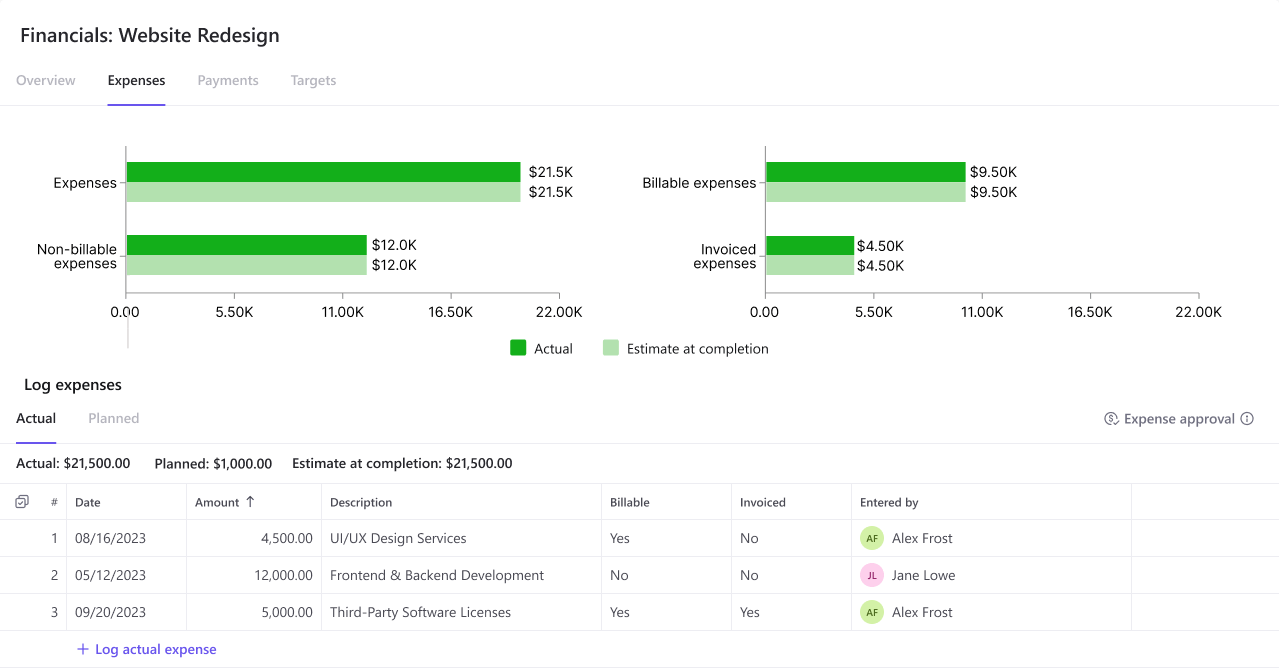
Clients want to know whether spending aligns with progress. Often, a simple view provides more confidence than detailed logs:
- Planned vs actual comparison
- Burn-rate trends
These answer the core question: are we on track?
3. Clear scope boundaries
Scope clarity reduces friction. Clients need to see:
- What was included in the original agreement
- What was added later
- What was approved as a change
When change requests are documented and discussed before billing, invoices feel predictable. When scope expansion appears only at invoicing, it feels like a surprise.
What clients generally do not benefit from is operational noise. Internal reallocations, draft estimates, or early-stage planning adjustments can create confusion rather than clarity. Transparency should be curated. It should focus on what strengthens understanding, not expose every internal detail.
Where the client experience gap usually appears
The experience gap tends to surface at consistent pressure points:
- Invoices that arrive without recent progress updates often trigger review anxiety.
- Large increases in billed hours feel alarming when burn-rate trends were not previously discussed.
- Scope creep becomes contentious when additional work is first discovered on the invoice itself.
Another common signal is the need for a manual narrative. If project managers regularly prepare separate summaries to justify invoices, it suggests that billing and delivery are not naturally aligned in a shared system. The explanation is compensating for missing visibility.
These patterns are not random. They are structural indicators that the client experience around billing needs attention.
Step-by-step: how to turn billing into a trust-building process
Closing the client experience gap requires operational discipline. The shift is less about communication style and more about alignment between delivery, finance, and visibility.
Step 1: Connect billing to visible project progress
The single most effective thing you can do is link your invoices to milestones. When a client opens an invoice and can see “Phase 2 complete: user testing, QA, and final revisions,” the amount stops feeling arbitrary. It’s attached to something real.
- Link each invoice or billing period to specific deliverables or milestones from the agreed scope.
- Never bill for a phase without making the associated output visible first.
- Add a short summary of what was achieved alongside what was billed. Even a sentence or two shifts the entire tone.
In Birdview, you can structure projects around milestones and tie time entries directly to tasks within those milestones. When it’s time to invoice, that connection is already there.
📚 Read more: How track billable and non-billable hours
Step 2: Make the budget burn transparent early
Waiting until the month-end to share budget information is one of the most common mistakes service firms make. By the time the invoice arrives, there’s no room to course-correct. The client’s only option is to dispute or accept.
- Share a high-level budget tracker with clients early in the engagement and update it regularly.
- Review burn rate in regular client check-ins, not just when invoices are due.
- If you’re tracking toward a budget threshold, flag it proactively, not reactively.
Step 3: Separate internal planning from client-facing visibility
Not everything in your project management tool belongs in front of a client. Internal effort tracking, team discussions, rework logs, and planning notes are useful internally but can create confusion when shared externally.
- Keep internal task tracking and team communication in your own workspace.
- Share only approved tasks, milestones, and client-facing deliverables through the client portal.
- Review what’s visible before giving a client access to anything.
Birdview’s client portal gives you controlled visibility settings so clients see a clean, relevant view without exposing the internal mechanics of how your team operates.
Step 4: Provide real-time access instead of static reports
Static PDF reports freeze information in time and often create dependency on monthly updates. A client portal changes that dynamic.
Example: With Birdview‘s Client portal, clients can review project status, milestone progress, and scope alignment between meetings. They do not need to request updates or wait for formal reports. This continuous access reduces back-and-forth clarification and lowers emotional tension around billing cycles.
Step 5: Align finance and delivery around one shared source of truth
Transparency collapses when finance and project management rely on different datasets. Birdview integrates time tracking, approvals, project progress, and invoicing into a single system. Approved time logs can flow directly into invoice generation, and data can be locked before billing to maintain consistency.
When both teams reference the same information, discrepancies decline. Clients experience a consistent narrative rather than conflicting explanations.
How Birdview supports transparent billing and client trust
Birdview provides the infrastructure to align delivery visibility with billing accuracy. The goal is simple: what clients see during the project should match what they are billed for at the end of the cycle.
- Phase and milestone-based project structure
Projects can be organized around clear phases and milestones. This ensures that billing corresponds to visible progress, not internal task movement. When a milestone is marked complete, it represents a tangible outcome that clients can recognize and validate.
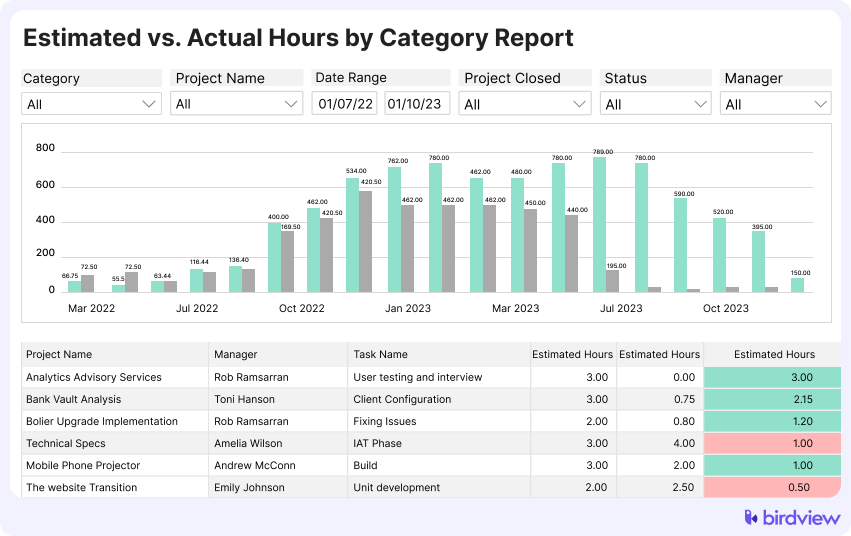
- Real-time planned vs actual tracking
Planned versus actual hours and costs can be monitored continuously. This allows project managers to see how work is tracking against the original budget before the billing period closes. Variances can be discussed early, reducing surprise at invoicing.
- Time entry review and approval
Time entries can be reviewed and approved before they are included in invoices. This step ensures that financial documents reflect verified work rather than unvalidated logs. It also creates a clear audit trail if questions arise later.
- Proactive budget discussions through dashboards
Dashboards provide a shared reference point for budget conversations during client reviews. Instead of reacting to invoices, teams can discuss burn rate, cost trends, and progress in advance. This shifts billing from a transactional moment to part of an ongoing dialogue.
- Controlled visibility through the Client portal
The Client Portal enables selective external access. Clients can monitor progress, milestones, and scope alignment without seeing sensitive internal data such as margin calculations or internal reallocations. This balance supports clarity without overexposure.
Final thoughts: transparency is your strongest retention lever
Billing will always be a defining moment in a client relationship. It can either introduce doubt or reinforce alignment.
When clients have ongoing visibility into progress, scope, and budget burn, invoices become expected confirmations rather than points of tension. Client portals, used thoughtfully, reduce uncertainty and replace reactive explanations with continuous clarity.
In professional services, trust is rarely built through grand gestures. It is built through consistent alignment. Transparency is how you sustain that alignment month after month.
FAQ: client portals and transparent billing
Q: Does giving clients portal access create more scrutiny?
A: When structured properly, it reduces reactive scrutiny. Clear milestone tracking and budget visibility prevent surprises, which are the main trigger for aggressive review.
Q: How much financial detail should be shared?
A: Share high-level planned versus actual comparisons and documented scope changes. Avoid exposing sensitive internal cost structures or operational adjustments that do not affect the client‘s commitments.
Q: What if actual hours exceed the estimate?
A: Address the trend early through visible burn-rate tracking and documented change requests. Early alignment transforms potential conflict into collaborative decision-making.
Q: Should invoices still include detailed time entries?
A: Yes, when contract terms require it. However, those details should reinforce what clients have already seen in the portal, not introduce an entirely new context.
Q: Can transparency genuinely improve retention?
A: Yes. Reduced uncertainty lowers friction, and lower friction strengthens long-term partnerships. Over time, that predictability becomes a competitive advantage.