

What is resource utilization?
First, let’s get the answer to the question, “What is resource utilization?”. Resource utilization refers to the amount of time or effort that a resource, such as people, equipment, or materials, is being used to complete work on a project.
It is a measure of how effectively and efficiently resources are being utilized in a project to achieve specific goals. High resource utilization means that resources are being used to their maximum capacity, while low resource utilization indicates that resources may be underutilized or that there is room for improvement in resource allocation. Effective resource utilization is critical to project success, as it can help to minimize costs, reduce delays, and improve overall project performance.
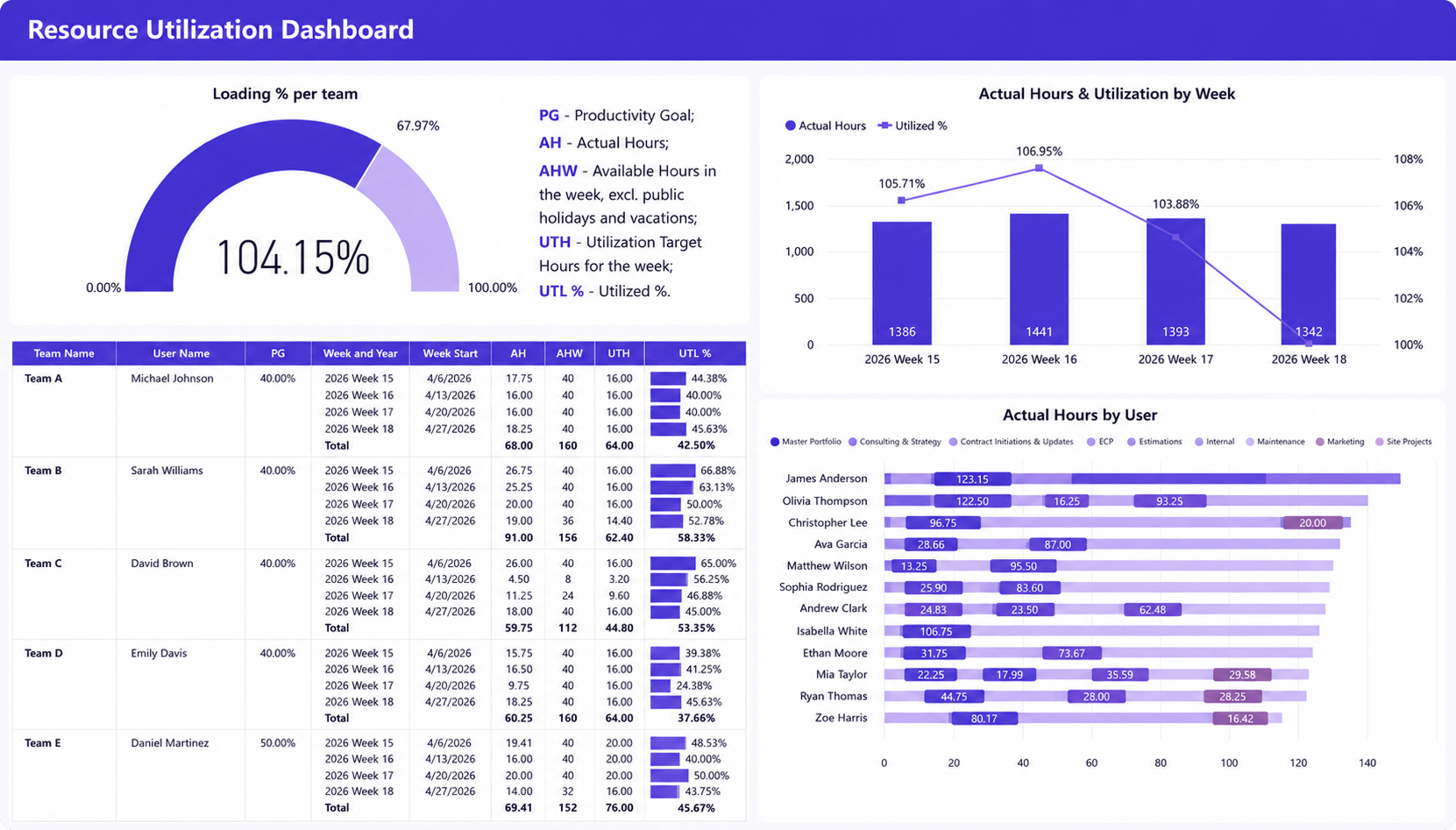
The resource utilization rate is a very valuable metric in project management resource analysis; it can be calculated for every team member individually or for an entire team.
Resource utilization in project management
Resource utilization in project management refers to how effectively team members, tools, and other resources are used to achieve project goals. It measures the percentage of available resources that are actively working on billable tasks, ensuring they’re not over-allocated or underused. Proper resource utilization is key to optimizing efficiency, controlling costs, and ensuring projects stay on schedule. To maximize resource utilization, project managers need to balance workloads, monitor capacity, and regularly reassess how resources are being deployed throughout the project lifecycle. Using tools like Birdview PSA can help track and optimize resource allocation, leading to more successful project outcomes.
How to calculate resource utilization
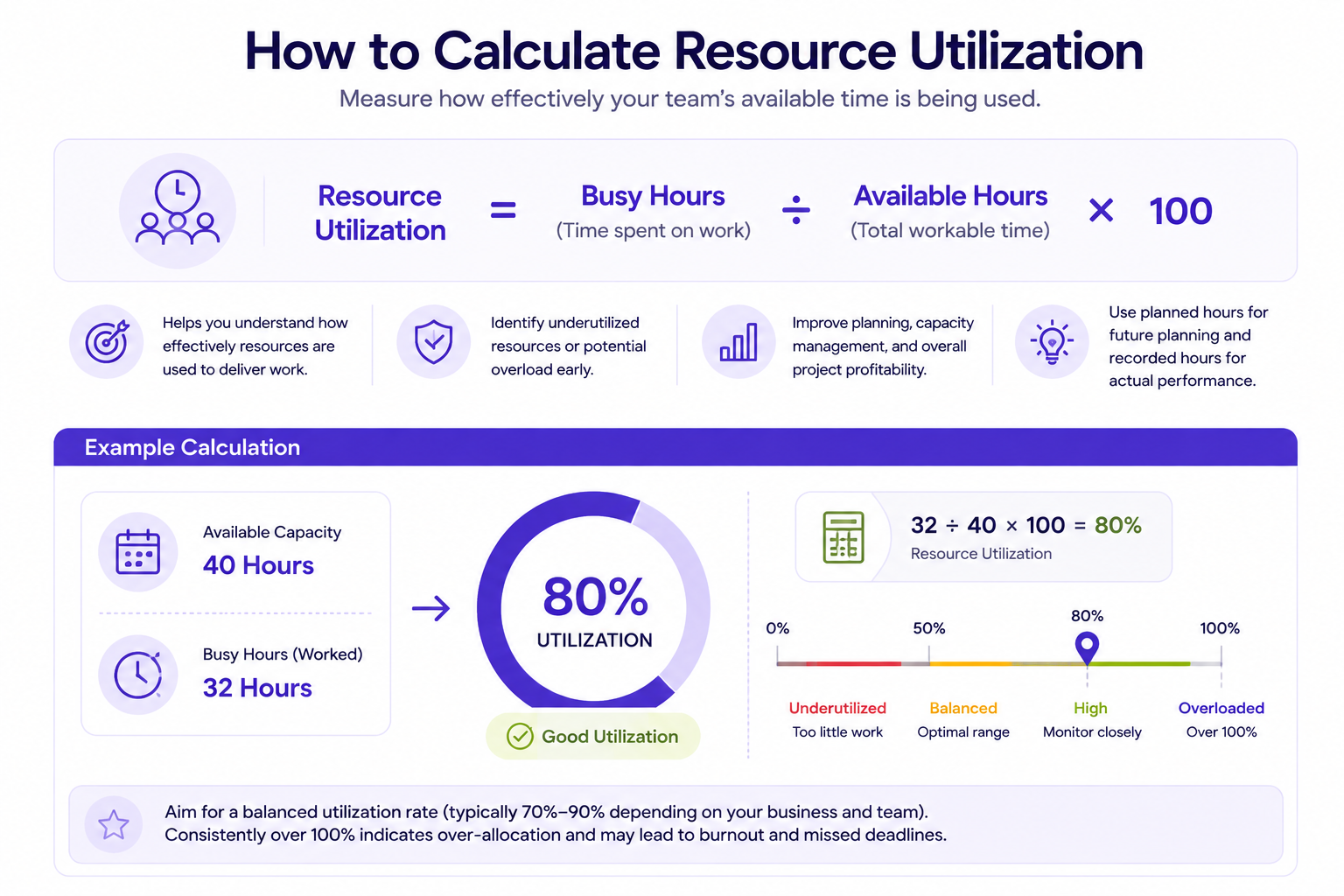
Resource utilization rate can be calculated by comparing the time your team spent working on projects or tasks with the overall time available to the team:
Resource utilization = Busy time / Available time
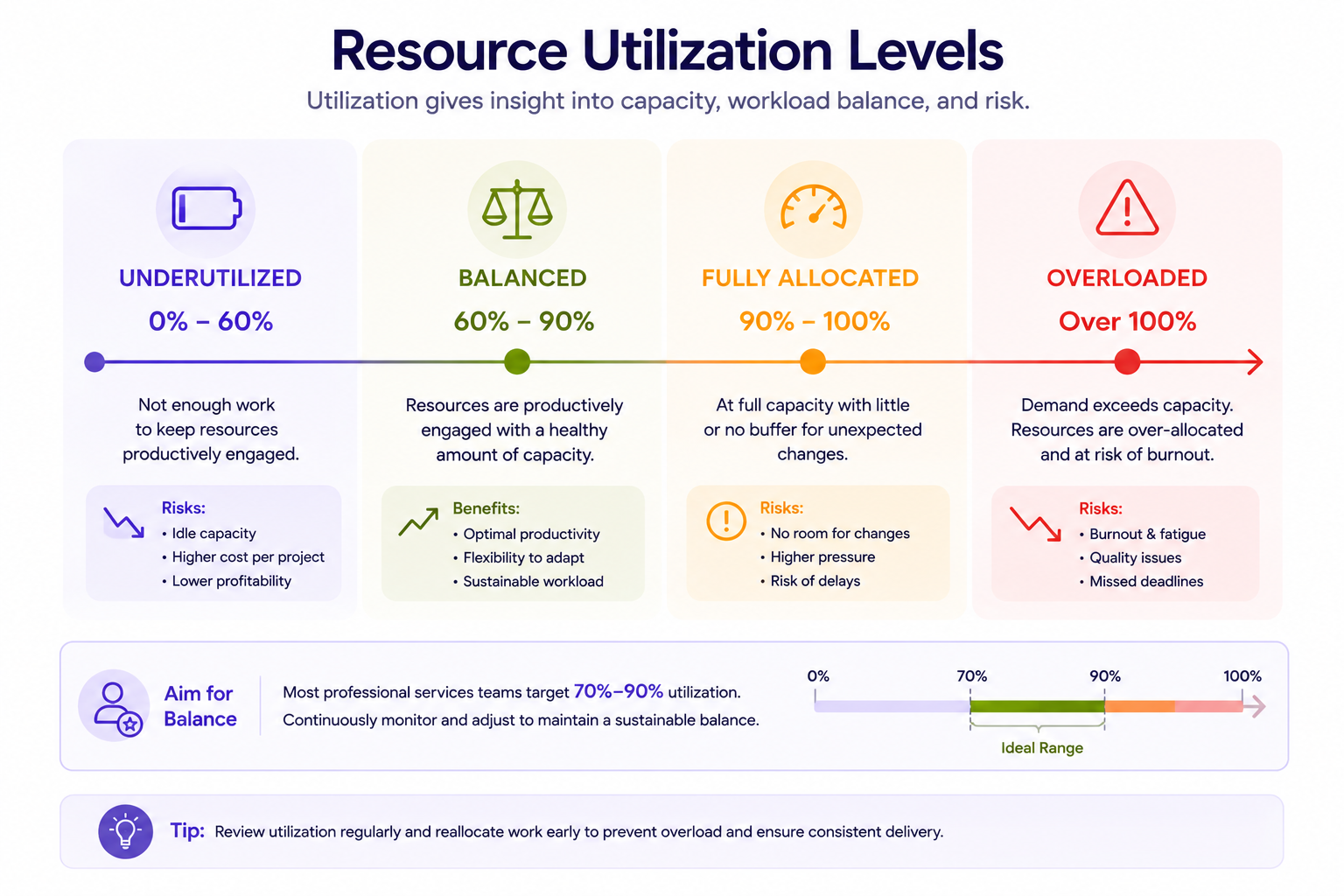
If the percentage is low, it means that your team members don’t have enough work. On the other hand, if the percentage is too high or over 100, someone is overloaded and you need to make adjustments asap.
Though this looks pretty easy to compute, the question of “time” arises. What kind of ‘time’ should we be calculating? Planned time or recorded time? It all depends on what your goal is.
For planning purposes, when you need to assess your team’s future workload you can use the formula with planned hours:
Planned resource utilization = Planned working hours / Available hours
If you’re looking at the historical data to understand what was the actual resource utilization of your team, use the formula that incorporates actual time recorded by each team member:
Resource utilization = Recorded hours / Available hours
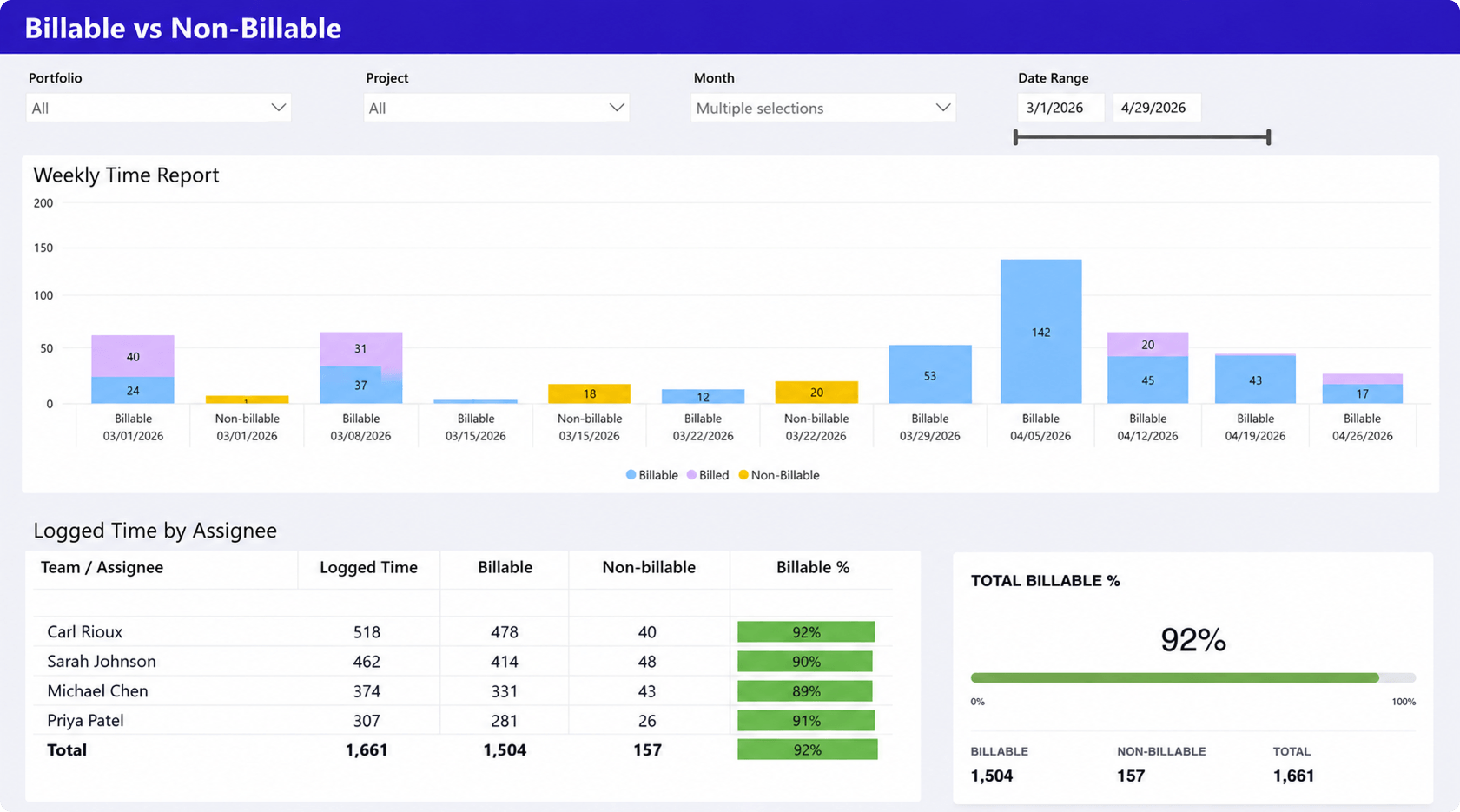
Billable Resource Utilization is another metric that allows you to understand what percentage of available time you are billing your clients.
Essentially, it is a ratio between the total billable hours spent by each resource to their available hours and is calculated as a percentage.
Utilization Rate = Billable Hours / Available Hours
Tracking utilization metrics for your team can be tricky business. It tends to put people on edge because it makes them feel like they are being micromanaged. Make sure that you have a team meeting to discuss understanding resource utilization is so crucial for the overall business success. It’s vital to be clear about this from the beginning so that there are no misunderstandings and you get the best possible data.
The resource utilization rate is a valuable little metric in project management resource analysis used to calculate how much of your team’s time is spent working, expressed as a percentage. The good thing about this is that you can calculate it for every team member individually.
Factors influencing resource utilization
Resource utilization is influenced by a combination of skills, workload, availability, project requirements, planning practices, and team dynamics. Understanding these factors helps organizations identify why resources may be underutilized or overloaded and where adjustments may be needed.
| Factor | Why It Affects Utilization | What to Monitor |
|---|---|---|
| Skill and Expertise Match | Matching people to work that fits their skills helps improve productivity and project outcomes. | Skills, experience, role requirements, and project needs. |
| Workload Balancing | Uneven workloads can leave some resources underutilized while others become overloaded. | Workload by person, team, role, and project. |
| Resource Availability | Actual availability determines how much capacity can realistically be assigned to project work. | Available hours, leave, existing commitments, and other non-project time. |
| Project Complexity and Scope | Complex or large projects may require specialized resources and more deliberate allocation decisions. | Project size, complexity, required skills, and resource demand. |
| Resource Allocation Tools and Systems | Centralized resource tools provide better visibility into utilization and help managers make informed allocation decisions. | Real-time allocation, availability, capacity, and utilization data. |
| Real-Time Adjustments | Changing deadlines, priorities, or project conditions can quickly make existing allocations inefficient. | Schedule changes, new priorities, resource conflicts, and workload shifts. |
| Communication and Collaboration | Clear communication helps project and resource managers identify resource needs and resolve allocation issues earlier. | Resource requests, allocation changes, ownership, and emerging constraints. |
| Resource Forecasting | Forecasting future demand helps organizations prepare capacity before shortages or excess availability occur. | Future demand, upcoming projects, capacity gaps, and hiring needs. |
| Resource Development and Training | Developing skills increases the range of work team members can perform and reduces dependence on a small number of specialists. | Skill gaps, training needs, and future project requirements. |
| Billable vs. Non-Billable Time | High overall utilization does not necessarily mean that enough time is being spent on revenue-generating work. | Billable hours, non-billable hours, total logged time, and billable utilization. |
8 effective strategies for maximizing resource utilization
Improving resource utilization requires ongoing planning rather than simply assigning more work. The following strategies help organizations balance workloads, respond to changing demand, and use available capacity more effectively.
| Strategy | What to Do | Expected Result |
|---|---|---|
| Regular Resource Analysis | Review utilization regularly to identify underutilized and overburdened resources, then adjust allocations based on project demand. | Better workload balance and more efficient use of available capacity. |
| Resource Allocation Flexibility | Reallocate resources when project priorities, schedules, or requirements change. | Fewer resource conflicts and faster response to changing demand. |
| Transparent Resource Management | Make allocation decisions and the reasoning behind them visible to the relevant teams. | Better alignment, collaboration, and understanding of resource priorities. |
| Cross-Functional Collaboration | Encourage regular communication between project managers and resource managers. | Closer alignment between project demand and available resource capacity. |
| Data-Driven Decision-Making | Use real-time resource data to evaluate availability, workload, and competing assignments before making allocation decisions. | Fewer allocation conflicts and more informed resource decisions. |
| Resource Forecasting and Capacity Planning | Forecast future resource demand and compare it with expected capacity before projects begin. | Earlier identification of shortages, excess capacity, and future staffing needs. |
| Regular Performance Monitoring | Monitor individual and team performance for signs of underutilization or overutilization and respond when problems appear. | Earlier workload correction and more sustainable resource utilization. |
| Resource Development Programs | Invest in training and development to expand employee skills and expertise. | Greater staffing flexibility and a broader range of available resource capabilities. |
By taking a proactive approach to resource utilization and implementing these strategies, organizations can optimize their resource allocation, reduce inefficiencies, and achieve successful project outcomes. Effective resource utilization not only enhances project performance but also contributes to the overall success and profitability of the organization. This builds on how resource planning works end to end.
Further Reading
Treat your team well to effective resource utilization
People are what make projects happen. They are the most valuable resource and should be treated as such. Resource analysis in project management is not just about getting a project done, it’s about treating your team right and respecting their limits for how much work they can accomplish in a given time period.
After all, a team that is overloaded and stressed out will not be happy. An unhappy team will lead to negative results and negative results will lead to a spiral of demotivation and some high turnover for your HR team to deal with.
But, since you have just learned to prevent that apocalyptic event from happening, we’re pretty sure you won’t have to worry about that at all.
Earned Value Analysis
Traditionally, resource analysis for a project would take some math and complicated equations to figure out but, lucky for us, Birdview PSA is a math whiz.

